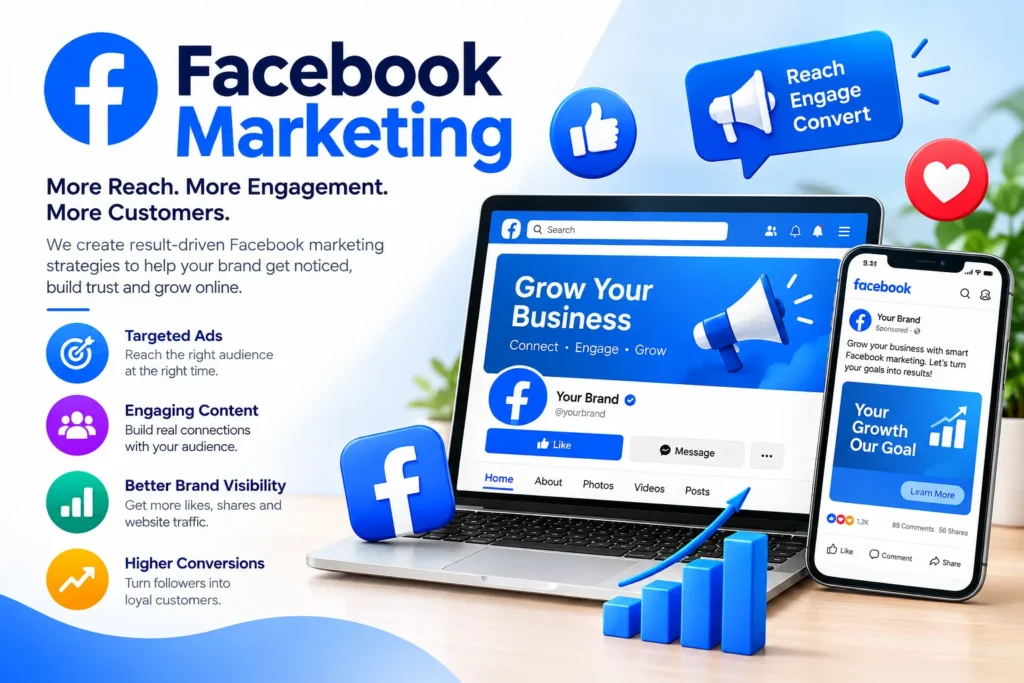

In today’s digital world, businesses need to be where their customers spend their time. Facebook is one of the platforms businesses can use to build an online presence, connect with potential customers, promote products or services, and generate leads.
Facebook Marketing refers to using Facebook to promote a business through organic content, Facebook Pages, videos, Reels, community engagement, and paid advertising campaigns.
Whether you run a small local business, an online store, startup, or service-based company, Facebook Marketing can be an important part of a digital marketing strategy.
What Is Facebook Marketing?
Facebook Marketing is the process of promoting a brand, product, service, or business on Facebook.
It can include both organic marketing and paid advertising.
Organic Facebook Marketing focuses on activities such as:
- Creating useful and engaging posts
- Sharing videos and Reels
- Building a Facebook Page
- Responding to comments and messages
- Growing an online community
- Sharing educational or entertaining content
Paid Facebook Marketing involves running advertising campaigns to reach selected audiences based on factors such as location, interests, demographics, and other available targeting options.
Why Is Facebook Marketing Important?
Facebook Marketing can help businesses increase their online visibility and communicate directly with potential customers.
Some common benefits include:
1. Build Brand Awareness
Regularly publishing valuable content can help people become familiar with your brand. Consistent branding, useful information, and engaging posts can help create recognition among your target audience.
2. Reach Potential Customers
Facebook provides businesses with tools to reach specific audiences. Businesses can create campaigns based on their marketing objectives and select relevant audience characteristics.
3. Generate Leads
Businesses can use Facebook content and advertising campaigns to encourage interested users to contact them, submit their details, visit a website, or take another desired action.
4. Promote Products and Services
Facebook can be used to introduce new products, promote services, announce offers, share customer-focused content, and drive traffic to a website or landing page.
5. Increase Customer Engagement
Comments, reactions, shares, and messages provide opportunities for businesses to interact with their audience and understand customer interests.
How Does Facebook Marketing Work?
A successful Facebook Marketing strategy usually starts with clearly defining the business objective.
For example, a business may want to:
- Increase brand awareness
- Generate leads
- Drive website traffic
- Promote a product
- Increase engagement
- Reach local customers
After defining the objective, businesses can create suitable content or advertising campaigns for their target audience.
The performance of campaigns can then be monitored using available Facebook/Meta analytics and reporting tools.
Facebook Organic Marketing vs Paid Marketing
There are two common approaches to Facebook Marketing.
| Organic Facebook Marketing | Paid Facebook Marketing |
|---|---|
| Focuses on regular content | Uses advertising campaigns |
| Builds audience engagement | Can reach selected audiences |
| Includes posts, videos and Reels | Includes paid advertisements |
| Usually does not require an ad budget | Requires an advertising budget |
| Focuses on long-term presence | Can be used for specific campaigns |
Businesses can use either approach or combine both depending on their goals and resources.
Facebook Marketing Strategies for Businesses
Create Valuable Content
Your content should provide a reason for people to follow or engage with your business. Educational posts, short videos, product information, FAQs, customer stories, and industry tips can all be useful content formats.
Use Visual Content
Images and videos can make business content more engaging and easier to understand. Short-form video content can also be used to explain products, demonstrate services, or share useful tips.
Understand Your Target Audience
Before creating campaigns, identify who you want to reach. Consider factors such as their location, interests, needs, and problems your business can solve.
Maintain Consistency
Posting consistently can help keep your business active and visible to your audience. Create a content calendar so you can plan posts in advance.
Use Clear Calls to Action
Tell users what you want them to do next. Depending on your goal, your call to action could encourage them to visit your website, send a message, learn more, contact your business, or make a purchase.
Monitor Performance
Review campaign and content performance regularly. Metrics such as reach, engagement, clicks, leads, and conversions can help you understand what is working and where improvements may be needed.
Facebook Ads for Business Growth
Facebook Ads can help businesses promote their products and services to selected audiences.
A typical advertising campaign involves:
- Defining the marketing objective
- Identifying the target audience
- Creating ad creatives
- Writing relevant ad copy
- Setting a budget
- Launching the campaign
- Monitoring performance
- Optimizing the campaign based on results
The right strategy depends on the business, target audience, competition, budget, and campaign objective.
Common Facebook Marketing Mistakes
Businesses often make mistakes that can reduce the effectiveness of their Facebook Marketing efforts.
Some common mistakes include:
- Posting without a clear strategy
- Targeting an unsuitable audience
- Using low-quality visuals
- Ignoring comments and messages
- Focusing only on promotional posts
- Not tracking campaign performance
- Using unclear calls to action
- Expecting immediate results without testing
Avoiding these mistakes and continuously improving your strategy can make your Facebook Marketing efforts more effective.
How to Create a Facebook Marketing Plan
A simple Facebook Marketing plan can follow these steps:
Step 1: Define Your Goal
Decide what you want to achieve.
Step 2: Identify Your Audience
Understand who your potential customers are.
Step 3: Plan Your Content
Create a mix of educational, informative, entertaining, and promotional content.
Step 4: Choose Your Advertising Strategy
If paid promotion is required, select the appropriate campaign objective and audience.
Step 5: Set a Budget
Determine how much you are comfortable investing in advertising.
Step 6: Track Results
Monitor important performance metrics.
Step 7: Improve Your Strategy
Use performance data to test and improve future campaigns.In today’s digital world, businesses need to be where their customers spend their time. Facebook is one of the platforms businesses can use to build an online presence, connect with potential customers, promote products or services, and generate leads.
Facebook Marketing refers to using Facebook to promote a business through organic content, Facebook Pages, videos, Reels, community engagement, and paid advertising campaigns.
Whether you run a small local business, an online store, startup, or service-based company, Facebook Marketing can be an important part of a digital marketing strategy.
What Is Facebook Marketing?
Facebook Marketing is the process of promoting a brand, product, service, or business on Facebook.
It can include both organic marketing and paid advertising.
Organic Facebook Marketing focuses on activities such as:
- Creating useful and engaging posts
- Sharing videos and Reels
- Building a Facebook Page
- Responding to comments and messages
- Growing an online community
- Sharing educational or entertaining content
Paid Facebook Marketing involves running advertising campaigns to reach selected audiences based on factors such as location, interests, demographics, and other available targeting options.
Why Is Facebook Marketing Important?
Facebook Marketing can help businesses increase their online visibility and communicate directly with potential customers.
Some common benefits include:
1. Build Brand Awareness
Regularly publishing valuable content can help people become familiar with your brand. Consistent branding, useful information, and engaging posts can help create recognition among your target audience.
2. Reach Potential Customers
Facebook provides businesses with tools to reach specific audiences. Businesses can create campaigns based on their marketing objectives and select relevant audience characteristics.
3. Generate Leads
Businesses can use Facebook content and advertising campaigns to encourage interested users to contact them, submit their details, visit a website, or take another desired action.
4. Promote Products and Services
Facebook can be used to introduce new products, promote services, announce offers, share customer-focused content, and drive traffic to a website or landing page.
5. Increase Customer Engagement
Comments, reactions, shares, and messages provide opportunities for businesses to interact with their audience and understand customer interests.
How Does Facebook Marketing Work?
A successful Facebook Marketing strategy usually starts with clearly defining the business objective.
For example, a business may want to:
- Increase brand awareness
- Generate leads
- Drive website traffic
- Promote a product
- Increase engagement
- Reach local customers
After defining the objective, businesses can create suitable content or advertising campaigns for their target audience.
The performance of campaigns can then be monitored using available Facebook/Meta analytics and reporting tools.
Facebook Organic Marketing vs Paid Marketing
There are two common approaches to Facebook Marketing.
| Organic Facebook Marketing | Paid Facebook Marketing |
|---|---|
| Focuses on regular content | Uses advertising campaigns |
| Builds audience engagement | Can reach selected audiences |
| Includes posts, videos and Reels | Includes paid advertisements |
| Usually does not require an ad budget | Requires an advertising budget |
| Focuses on long-term presence | Can be used for specific campaigns |
Businesses can use either approach or combine both depending on their goals and resources.
Facebook Marketing Strategies for Businesses
Create Valuable Content
Your content should provide a reason for people to follow or engage with your business. Educational posts, short videos, product information, FAQs, customer stories, and industry tips can all be useful content formats.
Use Visual Content
Images and videos can make business content more engaging and easier to understand. Short-form video content can also be used to explain products, demonstrate services, or share useful tips.
Understand Your Target Audience
Before creating campaigns, identify who you want to reach. Consider factors such as their location, interests, needs, and problems your business can solve.
Maintain Consistency
Posting consistently can help keep your business active and visible to your audience. Create a content calendar so you can plan posts in advance.
Use Clear Calls to Action
Tell users what you want them to do next. Depending on your goal, your call to action could encourage them to visit your website, send a message, learn more, contact your business, or make a purchase.
Monitor Performance
Review campaign and content performance regularly. Metrics such as reach, engagement, clicks, leads, and conversions can help you understand what is working and where improvements may be needed.
Facebook Ads for Business Growth
Facebook Ads can help businesses promote their products and services to selected audiences.
A typical advertising campaign involves:
- Defining the marketing objective
- Identifying the target audience
- Creating ad creatives
- Writing relevant ad copy
- Setting a budget
- Launching the campaign
- Monitoring performance
- Optimizing the campaign based on results
The right strategy depends on the business, target audience, competition, budget, and campaign objective.
Common Facebook Marketing Mistakes
Businesses often make mistakes that can reduce the effectiveness of their Facebook Marketing efforts.
Some common mistakes include:
- Posting without a clear strategy
- Targeting an unsuitable audience
- Using low-quality visuals
- Ignoring comments and messages
- Focusing only on promotional posts
- Not tracking campaign performance
- Using unclear calls to action
- Expecting immediate results without testing
Avoiding these mistakes and continuously improving your strategy can make your Facebook Marketing efforts more effective.
How to Create a Facebook Marketing Plan
A simple Facebook Marketing plan can follow these steps:
Step 1: Define Your Goal
Decide what you want to achieve.
Step 2: Identify Your Audience
Understand who your potential customers are.
Step 3: Plan Your Content
Create a mix of educational, informative, entertaining, and promotional content.
Step 4: Choose Your Advertising Strategy
If paid promotion is required, select the appropriate campaign objective and audience.
Step 5: Set a Budget
Determine how much you are comfortable investing in advertising.
Step 6: Track Results
Monitor important performance metrics.
Step 7: Improve Your Strategy
Use performance data to test and improve future campaigns.In today’s digital world, businesses need to be where their customers spend their time. Facebook is one of the platforms businesses can use to build an online presence, connect with potential customers, promote products or services, and generate leads.
Facebook Marketing refers to using Facebook to promote a business through organic content, Facebook Pages, videos, Reels, community engagement, and paid advertising campaigns.
Whether you run a small local business, an online store, startup, or service-based company, Facebook Marketing can be an important part of a digital marketing strategy.
What Is Facebook Marketing?
Facebook Marketing is the process of promoting a brand, product, service, or business on Facebook.
It can include both organic marketing and paid advertising.
Organic Facebook Marketing focuses on activities such as:
- Creating useful and engaging posts
- Sharing videos and Reels
- Building a Facebook Page
- Responding to comments and messages
- Growing an online community
- Sharing educational or entertaining content
Paid Facebook Marketing involves running advertising campaigns to reach selected audiences based on factors such as location, interests, demographics, and other available targeting options.
Why Is Facebook Marketing Important?
Facebook Marketing can help businesses increase their online visibility and communicate directly with potential customers.
Some common benefits include:
1. Build Brand Awareness
Regularly publishing valuable content can help people become familiar with your brand. Consistent branding, useful information, and engaging posts can help create recognition among your target audience.
2. Reach Potential Customers
Facebook provides businesses with tools to reach specific audiences. Businesses can create campaigns based on their marketing objectives and select relevant audience characteristics.
3. Generate Leads
Businesses can use Facebook content and advertising campaigns to encourage interested users to contact them, submit their details, visit a website, or take another desired action.
4. Promote Products and Services
Facebook can be used to introduce new products, promote services, announce offers, share customer-focused content, and drive traffic to a website or landing page.
5. Increase Customer Engagement
Comments, reactions, shares, and messages provide opportunities for businesses to interact with their audience and understand customer interests.
How Does Facebook Marketing Work?
A successful Facebook Marketing strategy usually starts with clearly defining the business objective.
For example, a business may want to:
- Increase brand awareness
- Generate leads
- Drive website traffic
- Promote a product
- Increase engagement
- Reach local customers
After defining the objective, businesses can create suitable content or advertising campaigns for their target audience.
The performance of campaigns can then be monitored using available Facebook/Meta analytics and reporting tools.
Facebook Organic Marketing vs Paid Marketing
There are two common approaches to Facebook Marketing.
| Organic Facebook Marketing | Paid Facebook Marketing |
|---|---|
| Focuses on regular content | Uses advertising campaigns |
| Builds audience engagement | Can reach selected audiences |
| Includes posts, videos and Reels | Includes paid advertisements |
| Usually does not require an ad budget | Requires an advertising budget |
| Focuses on long-term presence | Can be used for specific campaigns |
Businesses can use either approach or combine both depending on their goals and resources.
Facebook Marketing Strategies for Businesses
Create Valuable Content
Your content should provide a reason for people to follow or engage with your business. Educational posts, short videos, product information, FAQs, customer stories, and industry tips can all be useful content formats.
Use Visual Content
Images and videos can make business content more engaging and easier to understand. Short-form video content can also be used to explain products, demonstrate services, or share useful tips.
Understand Your Target Audience
Before creating campaigns, identify who you want to reach. Consider factors such as their location, interests, needs, and problems your business can solve.
Maintain Consistency
Posting consistently can help keep your business active and visible to your audience. Create a content calendar so you can plan posts in advance.
Use Clear Calls to Action
Tell users what you want them to do next. Depending on your goal, your call to action could encourage them to visit your website, send a message, learn more, contact your business, or make a purchase.
Monitor Performance
Review campaign and content performance regularly. Metrics such as reach, engagement, clicks, leads, and conversions can help you understand what is working and where improvements may be needed.
Facebook Ads for Business Growth
Facebook Ads can help businesses promote their products and services to selected audiences.
A typical advertising campaign involves:
- Defining the marketing objective
- Identifying the target audience
- Creating ad creatives
- Writing relevant ad copy
- Setting a budget
- Launching the campaign
- Monitoring performance
- Optimizing the campaign based on results
The right strategy depends on the business, target audience, competition, budget, and campaign objective.
Common Facebook Marketing Mistakes
Businesses often make mistakes that can reduce the effectiveness of their Facebook Marketing efforts.
Some common mistakes include:
- Posting without a clear strategy
- Targeting an unsuitable audience
- Using low-quality visuals
- Ignoring comments and messages
- Focusing only on promotional posts
- Not tracking campaign performance
- Using unclear calls to action
- Expecting immediate results without testing
Avoiding these mistakes and continuously improving your strategy can make your Facebook Marketing efforts more effective.
How to Create a Facebook Marketing Plan
A simple Facebook Marketing plan can follow these steps:
Step 1: Define Your Goal
Decide what you want to achieve.
Step 2: Identify Your Audience
Understand who your potential customers are.
Step 3: Plan Your Content
Create a mix of educational, informative, entertaining, and promotional content.
Step 4: Choose Your Advertising Strategy
If paid promotion is required, select the appropriate campaign objective and audience.
Step 5: Set a Budget
Determine how much you are comfortable investing in advertising.
Step 6: Track Results
Monitor important performance metrics.
Step 7: Improve Your Strategy
Use performance data to test and improve future campaigns.